Where to Meet Your Driver at Dublin Airport: Terminal 1, Terminal 2, and What Happens After You Land
A calm walk-through of arriving at Dublin Airport with a pre-booked chauffeur: which terminal you will come out of, what happens between the aircraft and the arrivals hall, where the driver stands, how delays are handled, and the short walk to the vehicle.
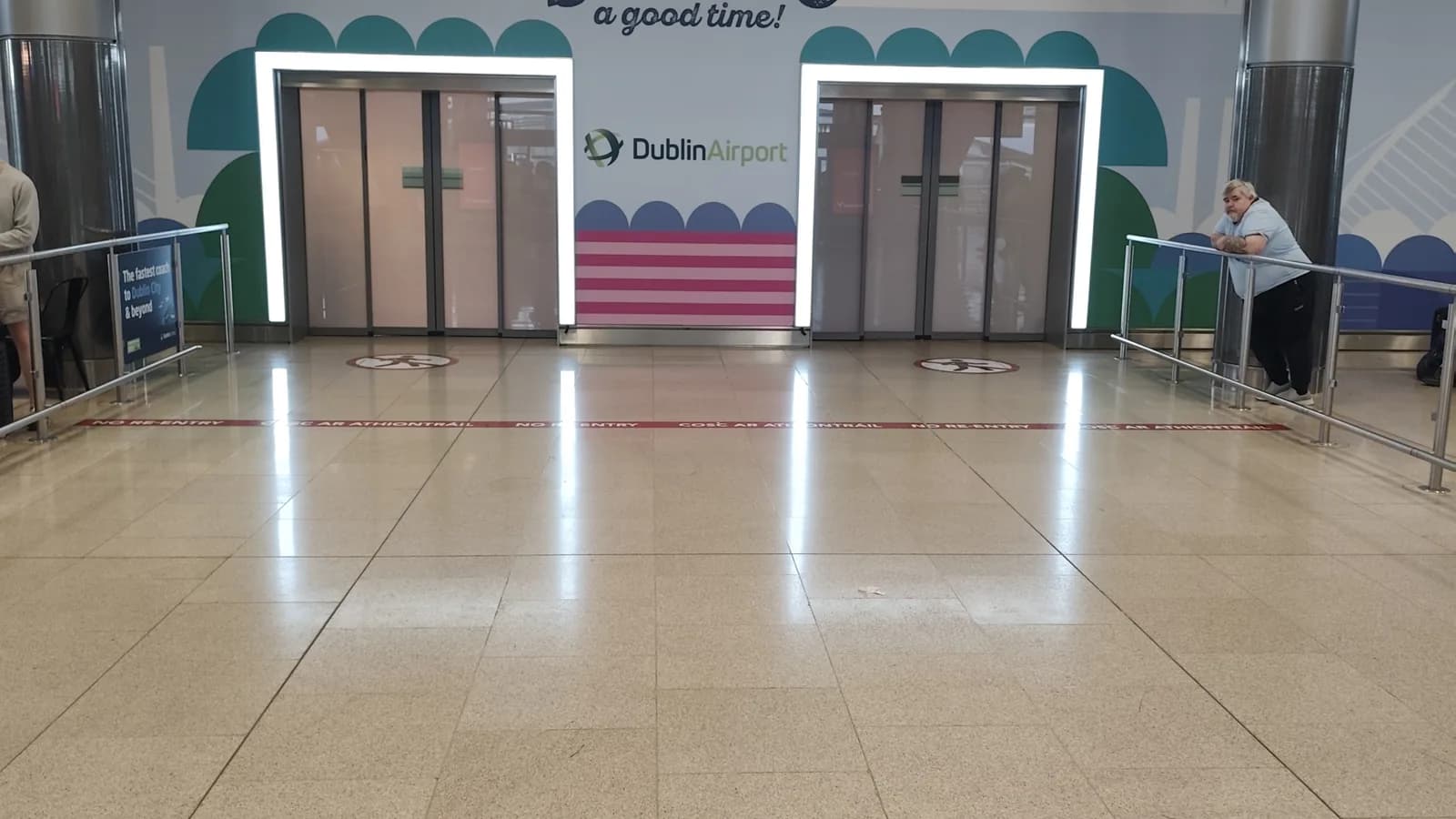
Most questions we receive before a Dublin Airport collection are not about the car or the fare. They are about the first twenty minutes on the ground: which terminal the flight uses, how long passport control and baggage take, where exactly the driver will be standing, and what happens if the aircraft is late. These are sensible things to ask, particularly after a long-haul flight or when travelling with children, older relatives, or a group that has flown in from different places.
This guide answers those questions in the order they arise, from the aircraft door to the moment the cases are in the boot. It applies to any of the Dublin Airport collections listed on the airport transfers page, whether the onward journey is a short run into the city, a direct transfer to Athlone or Galway, or the first leg of a longer tour of Ireland. Nothing here requires an app, a phone signal, or a meeting point in a car park.
Terminal 1 or Terminal 2: which one you will walk out of
Dublin Airport has two terminals a few minutes' walk apart, and arriving passengers come out into one of two separate arrivals halls. As a general rule, Aer Lingus and the transatlantic airlines use Terminal 2, while Ryanair and many European carriers use Terminal 1, but airlines do move and the flight number is the reliable guide. When a booking is made, the flight number is all that is needed; the terminal is checked on our side, so there is nothing for the traveller to work out after landing.
Both arrivals halls are at ground level, and both work the same way: passengers come through a set of sliding doors from baggage reclaim, past a red line marked no re-entry, into a public hall where people wait. That line is the natural place to look for a name board, because it is the one point every arriving passenger must pass. Guests arriving on separate flights, or on a flight connecting through another European airport, can be collected in the same booking with the pick-up timed to the later arrival.
From the aircraft to the arrivals hall, and how delays are handled
The time between landing and walking through those doors varies a great deal. Passengers with an EU passport and hand luggage only can be in the hall within a few minutes of the aircraft reaching its stand. Non-EU passport holders go through immigration first, and at busy periods, particularly in the early morning when several long-haul flights land close together, the queue and the wait at the carousel can add up to an hour or more. None of this needs to be managed by the traveller. The inbound flight is tracked from departure, and the driver plans around the actual landing time rather than the scheduled one.
An early landing, a late one, or a slow queue at passport control therefore changes nothing about the collection. Waiting time after the flight lands is included in the fixed fare, and the driver is in the hall with a name board showing the lead passenger's name when the group comes through. There is no need to telephone on arrival, though a message is always welcome if a bag has been delayed or someone has stopped to buy a SIM card. If a flight is cancelled or rebooked to a different day, the collection is simply moved to the new flight.
Luggage, the walk to the vehicle, and the road onward
Once everyone is together, the driver takes the trolley and leads the way to the vehicle, which is parked in the short-stay car park beside the terminal rather than at a distant pick-up zone. The walk is short and under cover for most of the way, which matters on a wet morning with several cases. The Volkswagen Transporter shown under the chauffeur fleet carries up to eight passengers with full-size luggage, golf bags, or a buggy in the boot, and child seats are fitted in advance when requested at booking.
From the airport, most journeys join the M50 within minutes and then the motorway west or south, so the group is clear of the city before anyone has settled into their seat. The Dublin Airport to Athlone transfer takes around an hour and a half, and the Dublin Airport to Galway transfer roughly two and a half hours, each at a fixed fare that already includes tolls, airport parking, and the waiting time described above. For travellers who like to know who will be meeting them, the company holds a current National Transport Authority licence, and the details are set out on the about page along with the driver's background.
Travel planning
See the Dublin Airport transfers and fares
Fixed fares, journey times, and FAQs for private transfers from Dublin Airport to Athlone, Galway, Belfast, Cork, Killarney, and the castle hotels, then send your flight number for a quote.
View Dublin Airport transfers and fares